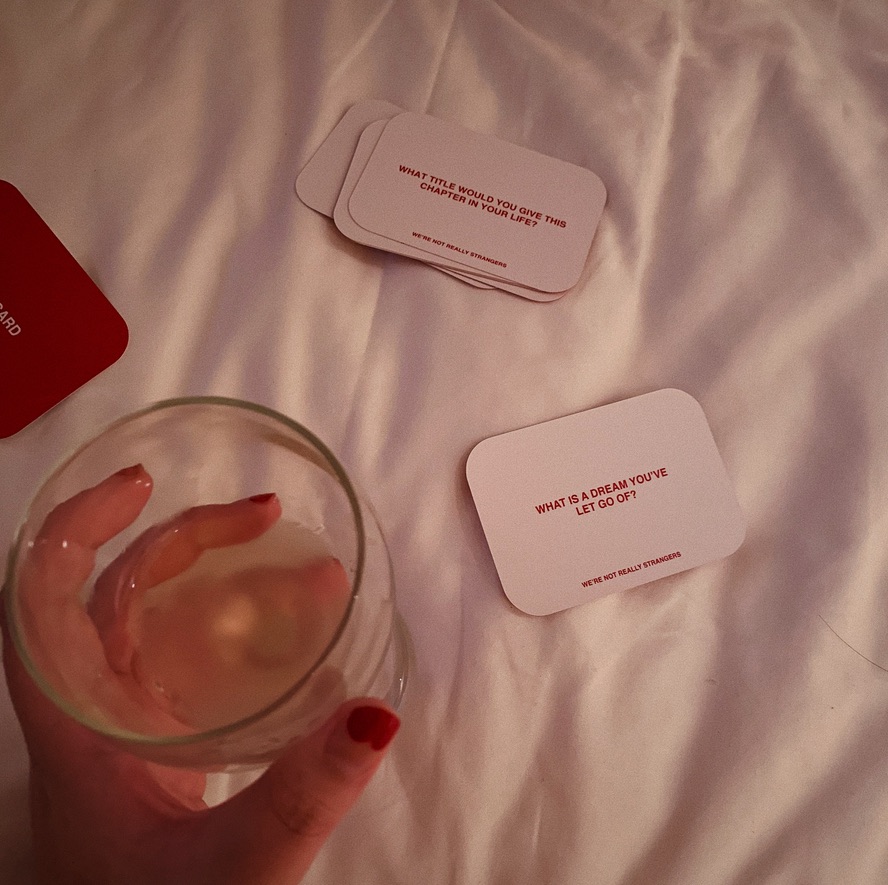
these days i have been living a lot more offline. it’s not a new refrain, and certainly not from me — social media gets too loud when you spend too much time on it; the intersection of forces (the pressure to perform a self on social media, the endless traffic of people trying to distill and eventually diluting advice on short form video content until it becomes a string of meaningless words, the way we’re all talking at each other and not really listening half the time, the way i stop properly listening or reading when i’ve scrolled for too long, read one too many captions) is really an oversaturated bright pool that hurts behind my eyes. i’m much happier and more regulated when i take time off, when i disappear into a book instead, when i sit with friends and purposefully learn about them again and again, week after week. i’m very lucky to be able to do this. i’ve also been re-learning how to regulate or process emotion.
these weeks, i’ve been feeling anger. i’ve also been attempting to dial it back into annoyance. hoping to fit it into a tamer colour by calling it a different name. but it’s anger, and some emotional burnout. the desire to assign blame bobs up every now and then like a pool float that won’t sink. i used to try to push those swimming boards under water and keep them there, an entertaining little game i played with myself during swimming classes, but they always popped back up, blue and yellow and cheerful, quite teasing. i’ve done that lately with my anger, my desire to nitpick at someone’s behaviour once i’m angry — pushed it down only for it to bounce back to the surface when i’ve loosened my grip. i never do anything else with it, it all stays in the humid pool of my brain.
to be clear, i’m resisting the urge to assign blame even in my head because it’s not helpful to do that. it allows me an easy out — a distraction from my own patterns, which are hard to look at and confront directly. the patterns that have led to where i am today, in the weeks leading up to this, are very much self-inflicted. and if i don’t examine my relationship with my own anger, or refuse to allow myself to feel it, all that does is put me back in the same loop.
i think when we’re socialised as women we grow up learning to pretend we don’t feel anger, or pretend that it looks different. Leslie Jamison’s 2018 article on it (sent to me by a very dear old friend) was pivotal to me in uncovering all the different ways female rage is stereotyped and received or read, and the implications of saying that we don’t feel anger. the essay refers also to Audre Lorde, whose speech on The Uses of Anger illuminates the ways anger as a response to racism can be healthy, productive, truthful if we learn to hold each other through rage, to meet each other and move forward. i’ve been reading about affect and the way language makes us feel, moves our bodies and gets under our skin, drives us towards certain emotions and away from others. the work of incorporating feeling as a way of knowing into my life is ongoing. but i cannot access galvanising and necessary calls to acknowledge anger as a way of knowing if i don’t first look at why i don’t want to admit that i feel it.
i used to genuinely believe i didn’t feel anger. myth: because i wasn’t taught that there was space to articulate what i felt in conflict, or even how to do it. because i learned that anger is a bad emotion morally — it hurt when my mother was angry with me, and she was angry with me so much. often i felt like i had to immediately suppress all my emotions in order to make things right and restore harmony. 1 i learned that anger is ugly and messy, and there was no space for mine. that when i showed it, i was bad and wrong. so i learned not to feel it entirely to cross over or erase my own boundaries in order not to feel it.
closely linked to this, i used to believe that i had endless capacity, endless patience and compassion, and so never felt resentment, which was adjacent to anger. truthfully what i had learned was actually to repress my own needs in favour of trying to be what someone else seemed to need. or at least seemed to tolerate or prefer from me. i maybe learned that i have worth only when i serve the purpose of letting people take from me endlessly. my time, my care, my resources. of course i grew resentful, but i learned to mask that resentment through avoidance. through hiding myself away and putting walls up.
ironically learning both of these things — the root of both is repression — only led to a mismanagement of my anger. because i refused to look my angry self in the eye and soothe her, i could never regulate anger properly, much less express it healthily or hear what it was telling me about my own needs, my own boundaries. i’ve been learning these things — my baby steps are just to set boundaries beforehand, to pay more attention to myself, and, in the occasion of feeling anger, to slow down and allow myself space without acting on it immediately.
but even coming into admitting to my anger now, i feel a lingering, pressing need to do it gracefully. and what does that even mean? some archetype — the woman who doesn’t lose her cool when she is angry. the woman who articulates it perfectly clearly, composed and level-headed, with exactly the right words and tone. no tremor in her voice, no yelling, no real vulnerability. is that anger, or a perfect performance of it?
years back when dating someone i really liked, i was dumped quite unceremoniously after a month of minimal contact, and no explanation for what was going on. in an open air hawker centre he told me he had unanimously decided we were better as friends, but didn’t have a further explanation for why. everything in my head turned to static. i tuned back in enough to say that i didn’t have an answer for if we could be friends, but that it would be painful not to have him in my life for awhile. i was proud of myself for the flatness in my voice, the lack of tears, the fact that i didn’t once feel like i wanted to beg for another chance. later i realised i was angry. for weeks i walked around with an aching stone of rage in my sternum at how someone could show so little care for me and then ask to be my friend.
i don’t think i behaved wrongly or badly in that circumstance, but that’s a view i’ve had to reparent myself into. of course i’m not advocating for smashing plates, getting violent, attacking someone’s character or arguing to hurt the other person. i’ve done those things and had them done to me and i don’t think they’re particularly helpful. but what is the image of graciousness that we cling onto so tightly, that i refuse to let go of, even when talking about anger? and what is a healthy expression of anger?
i made myself a playlist titled grace and range upon finding, a couple months ago, that i was angry at how a situation with a friend had played out. i clean the house to it sometimes, mopping until nothing else exists but the sound of the mop across the floor and in the bucket when i rinse it, and my hands when i wring the mop dry. i haven’t figured out what to do with that anger, only that i exist beside it, wordless, because i don’t even have the language. that helps a little; it feels more like a soft, heavy sack of liquid in my heart rather than the un-negotiable weight of a stone.
i’ve been feeling like my capacity is taken for granted, or that people i love take for granted that i will stay. but i struggle with that — the way my anger has manifested or articulated itself. why shouldn’t they feel safe in the knowledge that i’m not going anywhere? why shouldn’t they trust me when i offer support and tell them to take up space with me? truthfully it’s not the taking up space that upsets me at all. and truthfully anger is (for me) as they say, a second-hand emotion. underlying it is emotional exhaustion because i’ve crossed my own boundaries or allowed people to step right over them. i want to be taken care of without having to ask, now. to be considered while also effacing myself. that’s the product of these years of pretending that i don’t feel anger, of being so afraid of being imperfect and wrong that i refuse to look my anger in the eye, and admit that it exists. i have been abandoning myself in this way, over and over, hoping that i can do it enough times that it kills off that part of me forever, like some rubberband ligation to that emotion i don’t like expressing or seeing in myself. it’s not the first time i’ve done that.
but i’ve spent some time with my angry self these past couple of weeks. i’ve come a little closer to holding her hand. we sit side by side a little, and i do silly things like rant into the mirror and then tell myself yes, i know, it’s okay, feel it and let it go. i’ve confessed it to my friend who’s like an older sister to me, who said to me listen this is the boundary you need to set. i’ve taken that lesson. i’m learning not to view it as a failure — the fact that i’m feeling anger because i once again forgot to pay attention to my own exhaustion. i’m learning that it doesn’t necessarily mean i didn’t do enough to keep myself safe; failure is such a final immovable word. we don’t allow ourselves space really when we use it. so i’ve held my own hand and journalled things i won’t even write here, and it allows me to let the anger pass over so i can see that i’m tired and hurting and need to tend to myself. i still don’t know what a healthy expression of anger2 looks like, but i have every ability to learn. that’s another small promise i’m making to myself.
- my mother and i share a gorgeous relationship now that is growing every day, and i have essays to write about how much she has loved and held me since then. we had difficult years, and probably triggered each other deeply equally. i was a difficult daughter as much as she was, for me, difficult to talk to back then. none of that takes away from how much i love, respect and appreciate her now. i write this because it is important to me that if she reads this, she knows i don’t write about the past out of lingering unhappiness, only out of desire to be honest about the context. in other words, to try to take care of her feelings as best as i can. ↩︎
- i also hesitate to typify a “healthy” expression of anger because i am very aware of the ways that has put me in a loop of judging certain performances of anger or frustration as better than others, and this risks invalidating the very real rage that many often feel that should not need to be made presentable or palatable. Jamison’s article articulates the reality of this very well. what i mean is simply that i am looking for a way to express or give voice to anger (for myself) that is aimed at providing clarity and avoiding hurt to others as much as i can manage. ↩︎
 love letters to living.
Leave a comment